ENGLISH
 English
 简体中文
简体中文 Русский
 日本語
日本語 España
 Portugal
An IGBT module remains one of the most important building blocks in modern power electronics. Whether the end product is an industrial inverter, a motor drive, a welding system, an energy storage converter, or a solar inverter, the quality of the power stage often depends on whether the module was selected correctly in the first place.

In real engineering and sourcing work, choosing an IGBT module is rarely just about current and voltage. Teams also need to balance thermal design, switching behavior, package style, reliability, datasheet interpretation, lifecycle status, and commercial factors such as price, wholesale availability, and long-term supply. In many projects, buyers compare major brands such as Infineon, Fuji, and Mitsubishi with China manufacturer options to control cost without increasing field risk.
This guide is written for engineers, sourcing teams, product managers, and industrial buyers who need a practical reference built around real application logic. It focuses on module fundamentals, application matching, datasheet interpretation, pricing, and sourcing decisions that matter in actual projects.
What is IGBT Module?
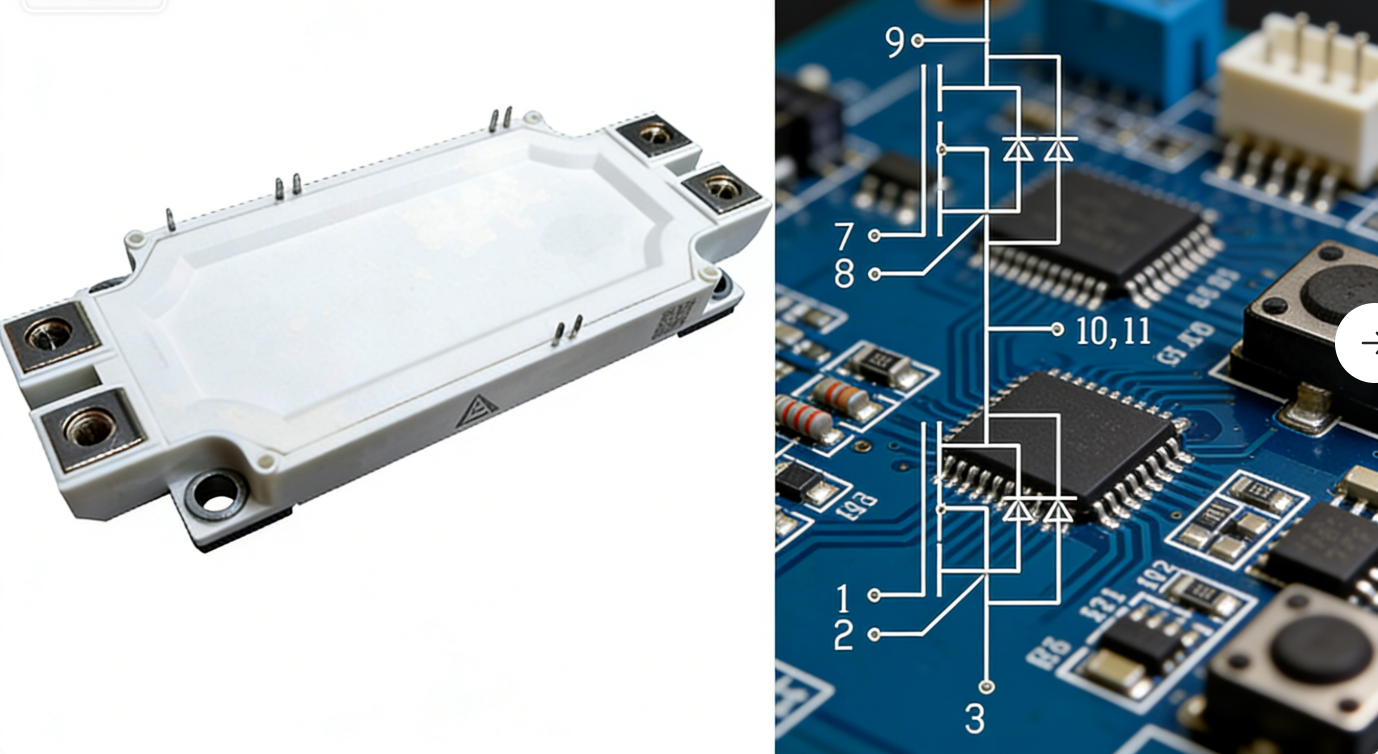
An IGBT module is a packaged power semiconductor assembly built around one or more insulated gate bipolar transistors, usually combined with freewheel diodes and arranged in a defined circuit topology. Compared with using many discrete devices, a module makes it easier to build a compact, thermally manageable, and production-friendly high-power conversion stage.
In simple terms, the IGBT inside the module acts like a controllable high-power switch. It allows electrical energy to be turned on and off rapidly, which is exactly what converters and inverters need to regulate voltage, current, speed, torque, or power flow.
The value of an IGBT module is not only that it can handle high voltage and substantial current. It also helps simplify mechanical mounting, reduce wiring complexity, improve heat transfer to the heatsink, and deliver better consistency in manufacturing. For many industrial systems, that combination is the reason it remains a core component.
Why IGBT Modules Are Still Critical in Power Electronics
The power semiconductor market includes MOSFETs, SiC devices, rectifier modules, and thyristor solutions, yet the IGBT module still holds an important position in medium- to high-power applications. It offers a practical balance between cost, ruggedness, and performance in many real-world systems.
IGBT modules are widely used in the following areas:
Industrial inverter systems
AC and servo drive systems
UPS and power conversion equipment
Solar inverters and energy storage converters
Welding, induction heating, and heavy-duty power control
Transportation support systems and industrial automation
For product developers and buyers, an IGBT module is not just a semiconductor part number on a BOM. It is a platform component that directly affects efficiency, thermal headroom, reliability, maintenance cost, and long-term service life.
Common IGBT Module Topologies
When searching the market, buyers often encounter different package formats and internal circuit structures. Understanding the topology is essential because electrical ratings alone do not guarantee functional compatibility.
Single Switch Module
This type contains one IGBT and its associated diode. It is usually used in specialized converter designs or custom power stages where engineers build the switching architecture themselves.
Half-Bridge Module
A half-bridge module integrates two switching devices in one package and is one of the most common structures in inverter design. It is widely used as a building block for motor control, UPS, and conversion systems.
Full-Bridge or H-Bridge Module
This topology supports bidirectional current control and is often used in motor control, DC-AC conversion, and other applications that need flexible switching behavior.
Six-Pack Module
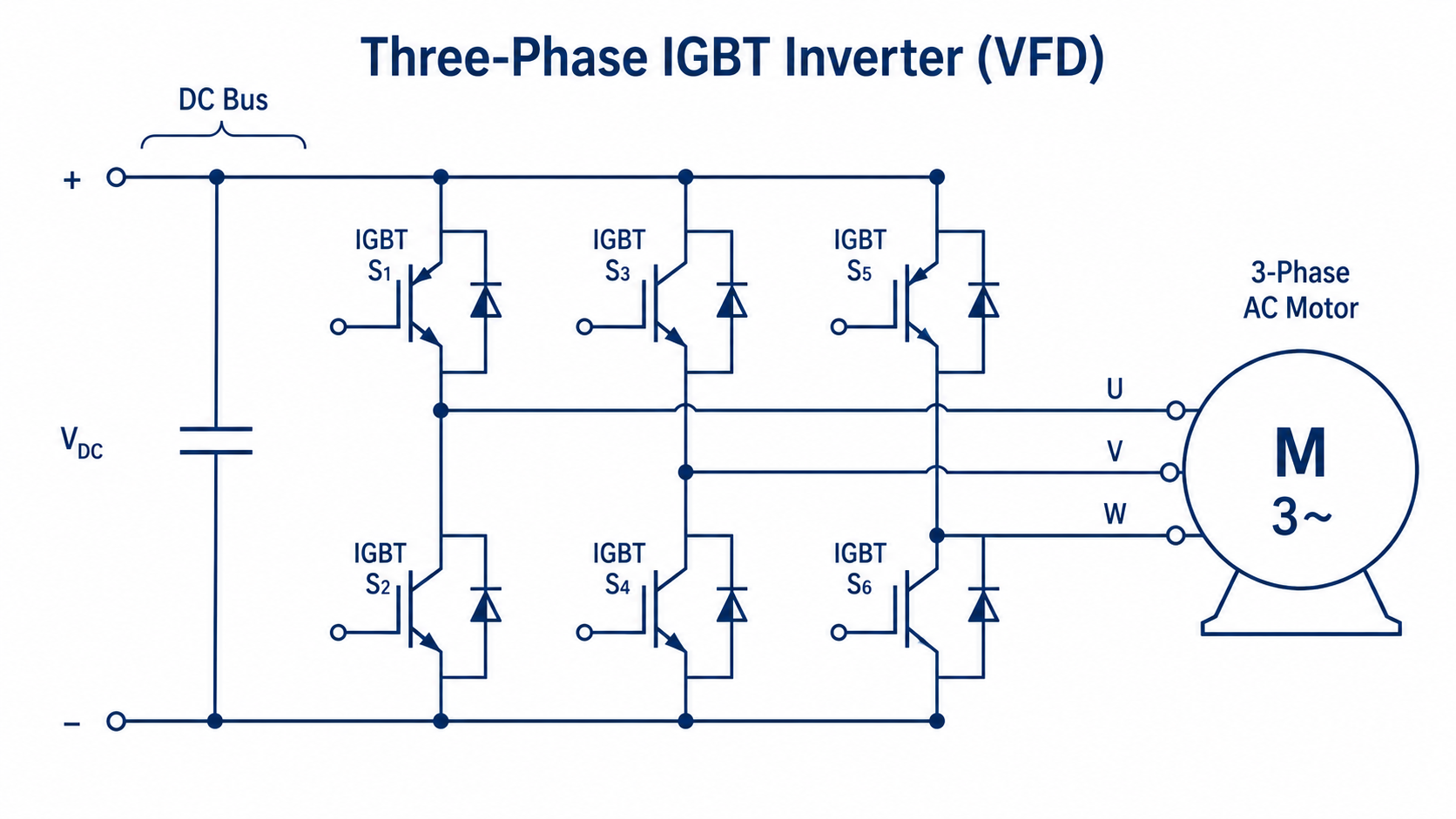
A six-pack module integrates the switches required for a three-phase inverter. It is a popular choice for compact industrial drive and inverter products because it helps reduce layout complexity.
Chopper Module
Chopper modules are typically used where DC voltage control, braking control, or energy management functions are required.
Bridge Module and Related Power Module Families
The term bridge frequently appears in the same sourcing environment as IGBT modules. Some buyers are looking for complete bridge-based power conversion solutions, while others are evaluating adjacent module categories used elsewhere in the same system.
This is where terms such as SKKD and SKKT become relevant. Strictly speaking, SKKD and SKKT commonly refer to diode module and thyristor module families rather than IGBT modules. However, they often appear in the same procurement workflow because distributors, repair teams, and power electronics buyers regularly manage mixed module inventories. If a project involves both rectification and inversion, it is normal to compare IGBT modules alongside SKKD/SKKT-type products at the sourcing level.
That said, these categories should never be mixed without confirming the circuit function. Similar package styles do not mean identical electrical roles.
Key Application Scenarios for IGBT Modules
IGBT Module in Inverter Systems
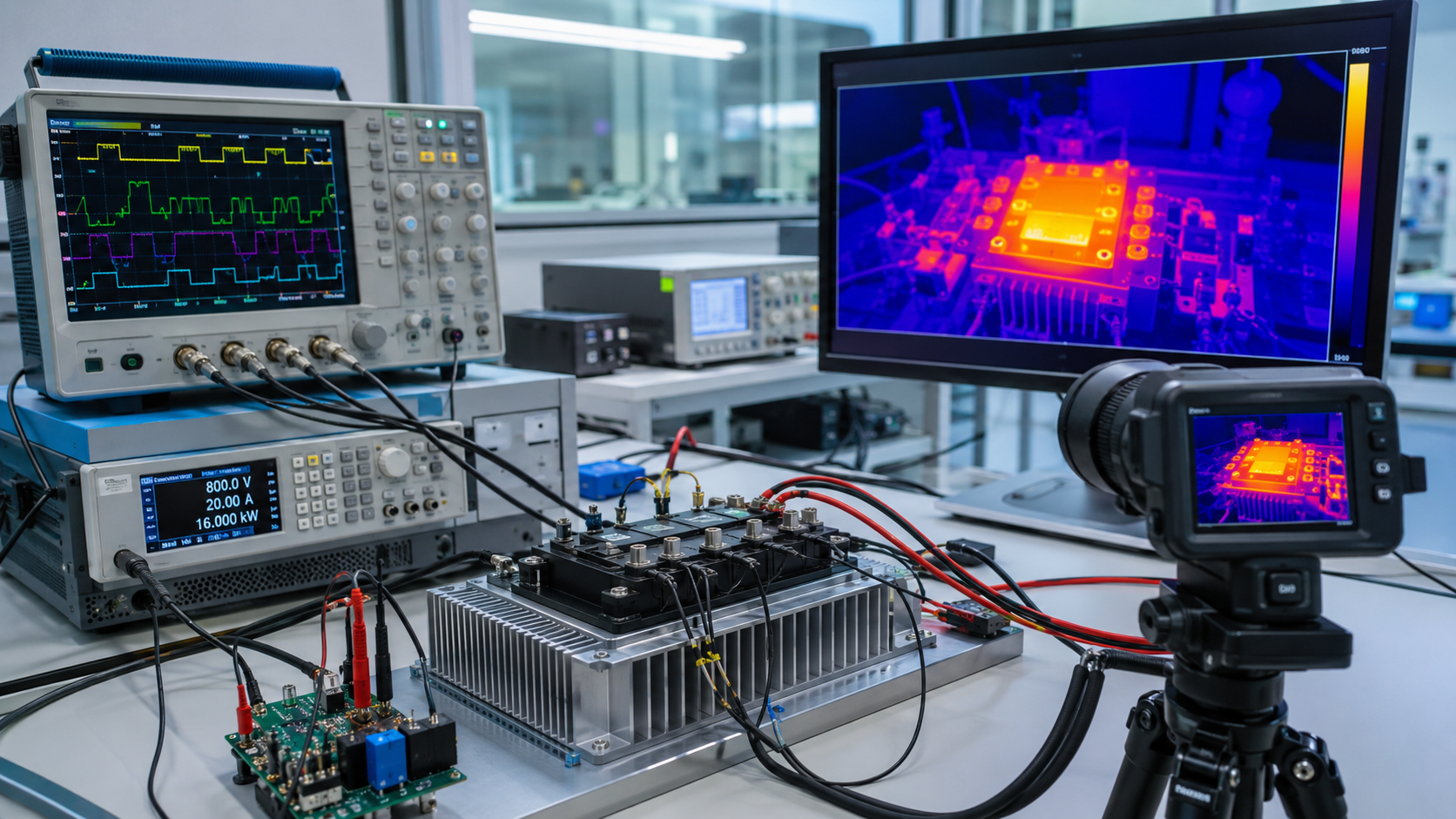
The inverter is one of the most common contexts for IGBT module selection. In industrial systems, the inverter converts DC into controlled AC output for motors, pumps, compressors, and automation equipment. The chosen module directly affects switching loss, thermal behavior, overload performance, and overall system efficiency.
For inverter applications, engineers usually evaluate:
DC bus voltage
Rated current and overload current
Switching frequency
Gate drive requirements
Short-circuit withstand capability
Thermal resistance and cooling design
Isolation and creepage structure
A mismatch in any of these areas can reduce reliability or increase thermal stress over time.
IGBT Module in Motor Drive Systems
In a drive application, dynamic operating conditions matter as much as nominal electrical rating. Motor drives often face repeated acceleration, deceleration, regenerative events, and thermal cycling. Because of that, the best module is not always the one with the highest current figure or the lowest price.
A dependable drive design usually requires attention to the following:
Cyclic overload capability
Temperature swing tolerance
Switching softness versus speed
Protection coordination with the gate driver
Heatsink quality and airflow
Safe operating behavior under real load profiles
This is why experienced engineers do not select a drive module based only on front-page datasheet values.
IGBT Module in Solar Inverter Systems
A solar inverter creates a different design challenge. Efficiency, thermal stability, long operating hours, and field reliability become especially important. A solar system may run for long periods in changing ambient conditions, and field replacement can be costly.
For solar projects, teams typically focus on:
Conversion efficiency across realistic operating ranges
Stable switching characteristics over temperature
Low thermal stress during daily cycling
Lifecycle consistency for service support
Documentation quality for maintenance and compliance
In commercial and utility-scale systems, consistency across production lots can matter almost as much as headline efficiency.
How to Read an IGBT Module Datasheet Correctly
The datasheet is one of the most important documents in IGBT module evaluation. Many sourcing and engineering mistakes happen because the datasheet is treated like a marketing sheet rather than a technical contract.
Collector-Emitter Voltage
This parameter defines the maximum blocking voltage of the module. It must be matched to the system DC bus with sufficient design margin. Running too close to the rated limit may reduce reliability during transient conditions.
Collector Current Rating
Current values are usually specified under defined thermal and test conditions. The headline rating does not automatically apply to every cooling method or switching profile, so engineers need to check the context carefully.
Saturation Voltage and Switching Energy
These figures influence conduction loss and switching loss. A lower-loss device can improve efficiency, but only when it is evaluated under realistic gate drive and thermal conditions.
Thermal Resistance
This value helps estimate how heat moves from the semiconductor junction to the case and then into the heatsink. Weak thermal design is one of the most common causes of reduced module life.
Short-Circuit Capability
Short-circuit withstand time is critical in industrial inverter and drive applications because it determines how quickly the protection system must respond during a fault.
Gate Characteristics
Recommended gate voltage, gate threshold, and gate resistance guidance all affect switching behavior. Even a good module can perform poorly if it is driven incorrectly.
Mechanical Outline and Mounting Requirements
Package dimensions, terminal layout, isolation structure, and torque recommendations matter in real production. A technically suitable module can still become a manufacturing problem if mechanical details are overlooked.
Best practice is to review the datasheet jointly across hardware, thermal, and sourcing teams. That approach reduces the risk of selecting a module that looks acceptable on paper but causes hidden issues in system integration.
How to Compare IGBT Module Manufacturers
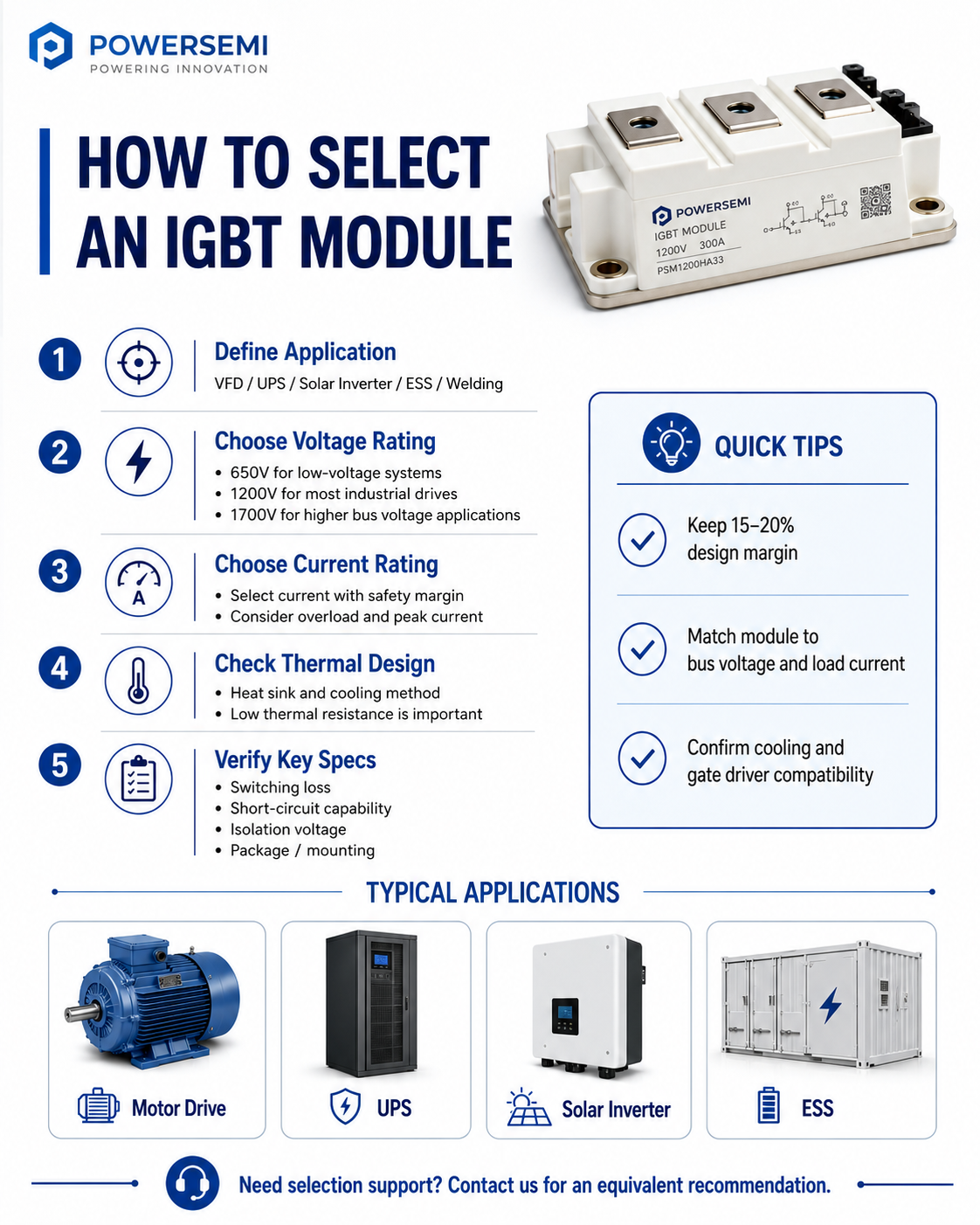
The manufacturer matters because an IGBT module is a reliability-sensitive power component. Differences in chip technology, package quality, process control, testing discipline, technical support, and lifecycle management can all affect field performance.
Infineon
Infineon is widely recognized in industrial power electronics and is often considered for high-performance inverter and drive designs. Buyers commonly value the brand for broad application support, mature industrial channels, and strong technical documentation.
Fuji
Fuji modules are widely used in industrial equipment, motor control, and long-service applications. Many engineers view Fuji as a stable industrial brand with solid application history in automation and power conversion.
Mitsubishi
Mitsubishi has long been an important name in the power semiconductor field. It is often evaluated for industrial drives, heavy-duty systems, and applications where long-term reliability is a primary concern.
China Manufacturer Options
A qualified China manufacturer may offer attractive cost structure, flexible MOQ, shorter lead times, or customization support. For cost-sensitive projects, this can be a real advantage. However, supplier qualification should always be based on verification rather than assumption.
When evaluating a China factory source, buyers should ask the following questions:
Is the datasheet complete and technically credible?
Does the supplier provide test data and traceability information?
Is package consistency controlled across production lots?
Can the supplier support failure analysis if issues appear in the field?
Is the module original design, authorized production, or compatible replacement?
How stable is the long-term supply chain?
The strongest sourcing strategy is not “global brand versus China.” It is selecting the supplier that fits the application, quality requirement, and lifecycle plan with evidence.
How to Evaluate IGBT Module Price Correctly
The search term IGBT module price is common, but unit cost alone is a poor decision tool. The true cost of a module includes design impact, reliability outcome, service burden, and sourcing stability.
A low quoted price may still create higher total cost if it leads to:
Extra thermal management expense
Higher field failure rate
Reduced production yield
Redesign caused by unstable specifications
Longer equipment downtime
Difficulty in replacement and service support
A practical price evaluation should include four levels:
1. Unit Price
Compare prototype, small-batch, and volume pricing rather than relying on one quoted number.
2. Application Cost
Check whether the module requires a larger heatsink, stronger gate driver, or more complex protection network.
3. Supply Cost
Evaluate lead time, lifecycle risk, second-source options, and continuity of supply.
4. Quality Cost
Calculate the possible cost of failure, repair, freight, lost production, and customer dissatisfaction. In many industrial sectors, these costs are far greater than the difference between two purchase quotes.
That is why serious buyers do not ask only for the lowest price. They look for the best validated value.
Wholesale, Factory, and Supply Strategy
For distributors, OEM buyers, repair centers, and industrial traders, wholesale and supply planning can be just as important as technical selection.
Direct Factory Purchasing
Buying directly from a factory can improve cost control and create better visibility into production planning. It may also help with special packing, custom labeling, and engineering communication. However, factory sourcing usually requires stricter qualification procedures and better forecast management.
Authorized Distribution
Authorized channels may provide stronger authenticity assurance, warranty handling, and traceability support. This is often the safer route for high-reliability or regulated applications.
Open Market Supply
The independent market can be useful when parts are urgent, obsolete, or under allocation. However, the risk of relabeling, poor storage history, and incomplete traceability is higher, which makes incoming inspection more important.
Stock Planning
In power semiconductor sourcing, poor stock planning creates expensive surprises. Buyers should evaluate:
Current lead time
Safety stock requirements
Lifetime buy risk
Replacement roadmap
Second-source feasibility
A disciplined supply strategy protects both production continuity and long-term customer support.
Common Mistakes in IGBT Module Selection
Choosing by Current Rating Alone
A current figure on the first page of a datasheet does not tell the full story. Actual capability depends on cooling, frequency, duty cycle, voltage stress, and overload profile.
Ignoring Thermal Cycling
A module may pass static electrical checks but still fail early under repeated temperature swings. This is especially relevant in motor drive and solar inverter applications.
Treating All Brands as Direct Equivalents
Two modules with similar labels may behave differently in switching performance, thermal resistance, package layout, or gate drive coordination.
Misreading Datasheet Test Conditions
Parameters measured at one temperature or one gate resistance do not automatically represent every real operating condition.
Mixing Power Module Categories
Searching for IGBT modules alongside SKKD, SKKT, diode modules, and thyristor modules is common in purchasing work, but substitution should only be made when circuit function actually matches.
Underestimating Supply Risk
A technically strong module can still be a poor business choice if long-term supply is unstable or lifecycle support is weak.
Direct Answers About IGBT Modules
What is the best IGBT module for an inverter?
The best IGBT module for an inverter depends on DC bus voltage, switching frequency, cooling method, overload demand, and required reliability. There is no universal best choice for every inverter platform.
How do I compare Infineon, Fuji, and Mitsubishi IGBT modules?
Compare them based on application fit, datasheet depth, thermal behavior, package compatibility, lifecycle support, and supply channel quality rather than brand recognition alone.
Are China IGBT module manufacturers worth considering?
Yes, provided the supplier has verified quality control, complete documentation, clear traceability, and successful validation in the target application.
Is lower IGBT module price always better?
No. Lower price can increase total cost if it causes efficiency loss, extra thermal design cost, unstable supply, or higher field failure risk.
Are SKKD and SKKT the same as IGBT modules?
Not generally. SKKD and SKKT are commonly associated with other power module categories such as diode and thyristor modules, even though they often appear in the same sourcing environment.
FAQ
How important is the datasheet when sourcing an IGBT module?
It is essential. The datasheet is the first technical filter for voltage margin, current capability, switching loss, thermal behavior, package fit, and protection design.
Should I buy from wholesale channels or directly from the factory?
That depends on volume, qualification capability, and risk tolerance. Factory purchasing can improve cost and flexibility, while established channels often offer better traceability and after-sales support.
What matters most in solar inverter applications?
Efficiency, thermal consistency, long operating life, and stable supply are the most important factors. Solar equipment is expensive to service, so reliability should not be traded for a small price advantage.
How do I judge whether a module fits a motor drive?
Look beyond nominal current. Check overload behavior, short-circuit capability, thermal cycling tolerance, gate drive compatibility, and mechanical mounting structure.
Is the market moving toward broader power module sourcing strategies?
Yes. Many buyers now evaluate complete power platform availability rather than only one part number, including bridge modules, rectifier modules, thyristor modules, and IGBT modules from the same supply ecosystem.
Conclusion
The right IGBT module is never just a basic BOM item. It is a strategic component that affects efficiency, reliability, service life, and procurement stability across the product lifecycle.
For engineers, the best decision comes from matching the module to the real electrical, thermal, and mechanical demands of the inverter, drive, or solar system. For buyers, the best decision comes from combining technical validation with disciplined sourcing, including careful datasheet review, realistic price analysis, qualified manufacturer selection, and long-term supply planning.
Brands such as Infineon, Fuji, and Mitsubishi remain important references in the industry, while qualified China factory sources can also be strong options when quality systems and traceability are verified. Related terms such as bridge, SKKD, and SKKT should be understood in the correct context so that adjacent module categories are not confused during procurement or repair work.
In today’s competitive industrial market, the companies that perform best are usually not the ones chasing the cheapest module. They are the ones making informed, application-specific, and well-documented decisions. That is the real path to better power design, better sourcing results, and stronger long-term credibility.