ENGLISH
 English
 简体中文
简体中文 Русский
 日本語
日本語 España
 Portugal
IGBT Passivation Function: Materials, Longevity, and Efficiency
In power electronics, the Insulated Gate Bipolar Transistor (IGBT) has become one of the most important semiconductor devices for high-voltage and high-current switching. It is widely used in electric vehicles, renewable energy inverters, industrial motor drives, and high-voltage transmission systems. While much attention is given to switching speed, thermal performance, and current ratings, one often overlooked but crucial factor is the IGBT passivation function.
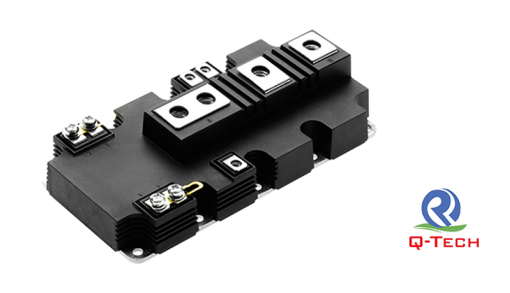
Passivation not only protects the device from environmental damage but also ensures electrical stability and long-term reliability. This article explains what the IGBT passivation function is, the materials used, and why it plays such a decisive role in the longevity and efficiency of IGBTs.
What Does Passivation Mean in IGBTs?
Passivation refers to the process of applying a protective insulating layer on the semiconductor surface. In IGBTs, this passivation layer serves multiple purposes:
Electrical Insulation – prevents surface leakage currents and unintentional conduction.
Environmental Protection – shields the IGBT surface from moisture, dust, and chemical contamination.
Charge Stabilization – reduces surface charge accumulation, ensuring predictable threshold voltage and stable switching.
Mechanical Stress Relief – protects against micro-cracks caused by thermal expansion and contraction during high-power cycles.
In short, the IGBT passivation function is vital for device durability and efficient performance, particularly under high-stress operating conditions.
Passivation Materials in IGBT Technology
The effectiveness of passivation depends heavily on the choice of materials. Each material has unique properties that make it suitable for different environments and performance requirements .
Silicon Dioxide (SiO₂):
One of the earliest passivation materials, SiO₂ provides good insulation but is less resistant to humidity and mechanical stress.Silicon Nitride (Si₃N₄):
Widely used due to its excellent moisture resistance, mechanical strength, and thermal stability. It helps maintain breakdown voltage in high-humidity environments.Polyimide:
Known for high flexibility and excellent thermal stability, polyimide passivation is increasingly used in high-power IGBTs, especially where thermal cycling is frequent.Epoxy Resin:
Provides mechanical reinforcement and chemical resistance but may degrade under extreme temperatures.Glass Layers:
Applied for high-voltage insulation and robust environmental protection, particularly in industrial and grid-level applications.
The choice of passivation material directly influences the reliability, efficiency, and lifetime of the IGBT.
Advanced Passivation Techniques
As IGBT technology evolves, advanced passivation methods are being adopted:
Chemical Vapor Deposition (CVD): Produces high-quality, uniform insulating films with strong adhesion.
Plasma-Enhanced CVD (PECVD): Allows lower-temperature deposition, suitable for delicate semiconductor structures.
Atomic Layer Deposition (ALD): Provides precise nanoscale thickness control for uniform coverage, enhancing breakdown voltage.
Nanocoatings: Ultra-thin protective films that improve resistance to corrosion and contamination.
Self-Healing Passivation Layers: Emerging research focuses on materials that can automatically repair micro-cracks, further extending IGBT lifespan.
These techniques highlight how the passivation function continues to evolve, enabling IGBTs to operate in harsher environments while maintaining efficiency.
Why Passivation is Critical for Efficiency and Longevity
The IGBT passivation function directly impacts both performance and durability:
Higher Efficiency: Stable passivation reduces leakage currents, ensuring minimal energy loss.
Enhanced Reliability: Devices resist degradation from moisture, dust, and chemical exposure.
Extended Lifetime: Passivation materials help devices survive repeated thermal cycles, a common stress in EVs and industrial drives.
Improved Safety: Prevents premature breakdown at high voltages, reducing failure risks in power-critical systems.
Real-World Applications
Electric Vehicles (EVs): Passivation ensures IGBTs in inverters can withstand high switching frequencies and temperature cycles.
Renewable Energy: Solar inverters and wind turbines rely on robust passivation to resist outdoor conditions.
Industrial Drives: Continuous operation under mechanical vibration and dust exposure demands strong passivation layers.
Power Grids: HVDC systems depend on passivated IGBTs to handle high voltage stresses with minimal energy loss.
Conclusion
IGBT passivation function is more than a protective coating—it is a critical enabler of performance, efficiency, and reliability in modern power electronics. By carefully selecting materials such as silicon nitride, polyimide, or glass, and employing advanced deposition techniques like ALD or PECVD, manufacturers can significantly extend the lifespan and stability of IGBT modules.
As industries move toward higher power density and more demanding applications, the importance of robust passivation will continue to grow. For engineers and system designers, understanding how passivation influences IGBT performance is essential for building efficient and reliable power systems.