ENGLISH
 English
 简体中文
简体中文 Русский
 日本語
日本語 España
 Portugal
Are MOSFETs and CMOS Same? Key Differences Explained
When you encounter electronic devices and circuits, do you ever wonder: are MOSFET and CMOS the same?
While both terms are closely related to semiconductor technology, they are not the same thing. In fact, MOSFET is a type of transistor device, on the other hand, CMOS refers to a technology built upon MOSFETs.
What is a MOSFET?
A MOSFET (Metal-Oxide-Semiconductor Field-Effect Transistor) is one of the most important and widely used components in modern electronics. At its core, it acts like a tiny switch that controls the flow of current in a circuit. Unlike older mechanical switches that rely on physical movement, a MOSFET uses an electric field to regulate charge flow. This makes it much faster, more efficient, and more reliable.
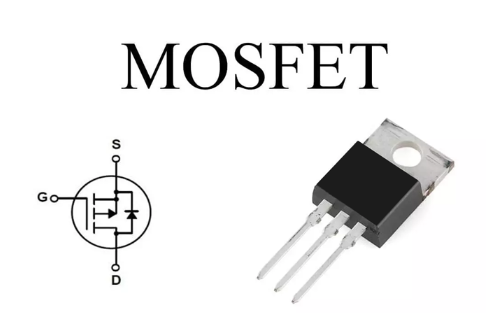
Because of these advantages, MOSFETs are found in countless applications—from power regulators and amplifiers to memory chips and processors. They are versatile enough to handle both high-power control and sensitive signal processing, making them indispensable across analog and digital systems. Thanks to their scalability, durability, and energy efficiency, MOSFETs remain the backbone of today’s electronic devices.
Key characteristics of MOSFETs:
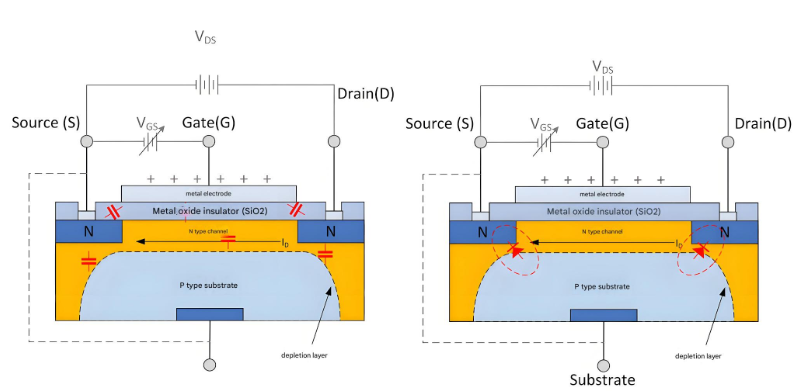
Basic function: MOSFETs act as electronic switches or amplifiers, controlling the flow of current between the drain and source terminals based on the voltage applied to the gate.
Structure: A MOSFET has four terminals – gate, source, drain, and body. The thin oxide layer beneath the gate is what gives it the “MOS” name.
Types of MOSFETs:
n-channel MOSFET (NMOS) – allows current to flow when a positive voltage is applied to the gate.
p-channel MOSFET (PMOS) – allows current to flow when a negative voltage is applied to the gate.
MOSFETs are the fundamental building blocks of most integrated circuits, including microprocessors, memory chips, and power management devices.
What is CMOS?
CMOS stands for Complementary Metal-Oxide-Semiconductor. Unlike a single MOSFET, CMOS is a technology that uses a pair of MOSFETs (one NMOS and one PMOS) working together.
Characteristics of CMOS technology:
Complementary design: CMOS circuits use both NMOS and PMOS transistors in a complementary arrangement.
Low power consumption: One of the biggest advantages of CMOS is that it only consumes significant power when switching states, making it highly energy efficient.
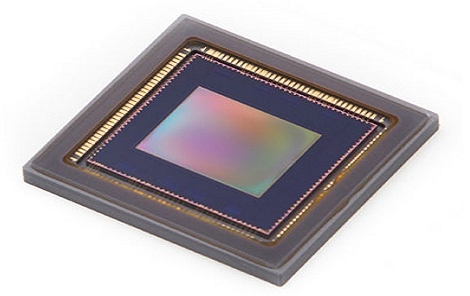
Applications: CMOS technology is used in logic gates, microcontrollers, digital signal processors, RAM, flash memory, and even image sensors.
Are MOSFETs and CMOS Same?
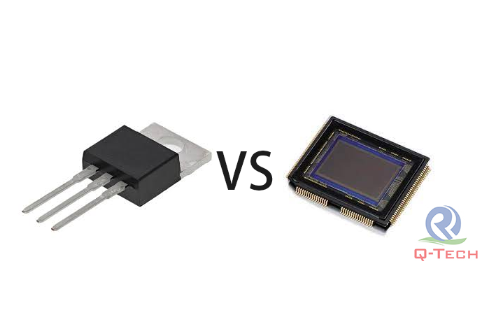
The short answer is no.
A MOSFET is a single device – a type of transistor.
CMOS is a technology or design approach that uses pairs of MOSFETs to build efficient circuits.
In other words, CMOS could not exist without MOSFETs, but MOSFETs can exist independently outside CMOS technology.
Think of it this way:
MOSFET is like a single brick.
CMOS is like a house built using many bricks in a specific arrangement.
So when someone asks, “are MOSFETs and CMOS same?” the accurate response is that MOSFETs are the fundamental units, while CMOS is a system that employs them in pairs.
Key Differences Between MOSFET and CMOS
| Feature | MOSFET | CMOS |
|---|---|---|
| Definition | A single transistor device | A technology using pairs of MOSFETs |
| Type | Can be NMOS or PMOS | Always involves both NMOS and PMOS |
| Role | Switch or amplifier | Power-efficient logic and digital circuits |
| Power Consumption | Depends on configuration | Very low, especially in static state |
| Applications | Power electronics, analog circuits, switching | Microprocessors, memory, logic gates |
Why the Confusion Happens
The confusion arises because CMOS circuits are built entirely from MOSFETs. Beginners often hear “CMOS transistor” or “CMOS chip” and mistakenly believe CMOS is a special type of transistor. In reality, CMOS is a design technique, not an individual transistor.
Another reason is that CMOS became the dominant semiconductor technology used in integrated circuits. Since almost every digital chip today is made with CMOS, people sometimes loosely refer to MOSFETs as CMOS, which is technically incorrect.
Importance of Understanding the Difference
Knowing the difference between MOSFET and CMOS is important for anyone working in electronics or studying electrical engineering:
Circuit design clarity – Engineers need to specify whether they are working with discrete MOSFET devices or CMOS-based ICs.
Power management – Understanding CMOS helps explain why modern chips consume so little power compared to older technologies.
Industry relevance – When reading datasheets, product catalogs, or research papers, distinguishing between a MOSFET transistor and a CMOS process avoids misinterpretation.
Practical Applications
MOSFET Applications: Used in switching regulators, amplifiers, motor drivers, RF circuits, and discrete power electronics. For example, a MOSFET may be used in a laptop’s power supply to control voltage.
CMOS Applications: Found in nearly every digital IC, including CPUs, GPUs, memory modules, and smartphone chips. CMOS ensures low power usage, making mobile devices efficient.
So, are MOSFETs and CMOS same?
Absolutely not. MOSFETs are the basic transistor devices, while CMOS is a technology that arranges NMOS and PMOS transistors in complementary pairs to achieve power-efficient digital logic.
Understanding this distinction is essential in electronics, whether you are designing circuits, studying semiconductors, or simply curious about how modern chips function. Next time you see the terms MOSFET and CMOS, you’ll know that one is a building block and the other is a technology built from those blocks.