ENGLISH
 English
 简体中文
简体中文 Русский
 日本語
日本語 España
 Portugal
EPS (Electric Power Steering)
Introduction
Electric Power Steering (EPS)is an advanced automotive system that replaces traditional hydraulic steering assistance with anelectric motor, providingprecise and energy-efficient steering support. By eliminating hydraulic pumps and fluids, EPS reduces energy loss and offers new possibilities forautonomous driving and active safety systems.
Core Components
Baoquan Zhijie's EPS solutions are built around three key modules:
Steering Sensor: detects steering angle and torque
Electronic Control Unit (ECU): calculates the required assistance in real-time
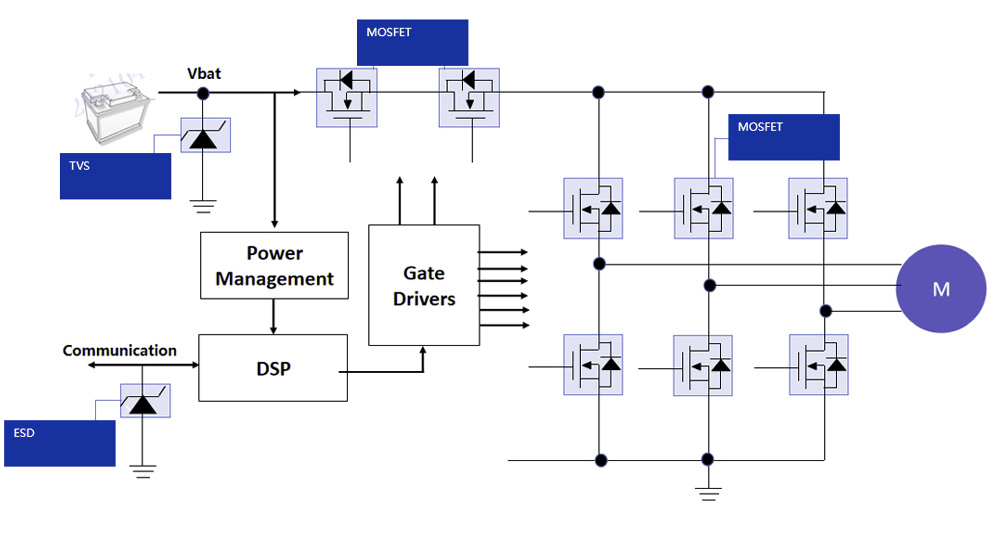
Power Steering Motor: delivers auxiliary power via MOSFET motor drivers and power modules
Core Advantages
Energy Saving - the motor only operates during steering, reducing energy consumption compared with hydraulic systems
Flexible Assistance - light steering at low speeds and stable assistance at high speeds
Low Maintenance - no hydraulic oil or pipelines, eliminating leakage risks and lowering service costs
High Integration - easily adaptable forautonomous drivingandactive steering systems
Common EPS Types
EPS systems are typically classified bymotor position:
Column Type EPS- motor integrated into the steering column, compact design
Rack Type EPS- motor directly drives the steering rack, delivering faster response, widely adopted in mid-to-high-end vehicles
Why Baoquan Zhijie
With expertise in MOSFET and IGBT motor driver solutions, Baoquan Zhijie empowers automotive manufacturers withreliable, efficient, and intelligent EPS systems, ensuringbetter fuel economy, safety, and readiness for next-generation autonomous driving applications.